

Hospitality
July 2026 · 8 min read
Designing the Five-Star Hotel Experience
Luxury is not a finish or a fixture. It is the choreography of arrival, comfort, atmosphere, and care—resolved through hundreds of considered details.
A five-star hotel earns its character long before a guest notices a particular chair, stone, or artwork. The experience begins in the transition from city to sanctuary: the pace of arrival, the first framed view, the sound beneath one's feet, and the confidence with which every next step is understood.
Luxury begins with choreography
The arrival sequence is the first promise a hotel makes. A generous entrance does not always require monumental scale; it requires clarity and rhythm. Compression can heighten the release into a lobby. A carefully positioned threshold can conceal service movement while opening a deliberate sightline toward landscape, art, or light. The guest should feel guided without feeling managed.
This choreography continues through check-in, lifts, corridors, and the guest-room door. Each transition should change the emotional tempo. Public spaces may invite discovery and social energy, while the journey to a room gradually becomes quieter, softer, and more private. When these shifts are resolved spatially, signage becomes less necessary and the experience feels intuitive.
The room as a series of rituals
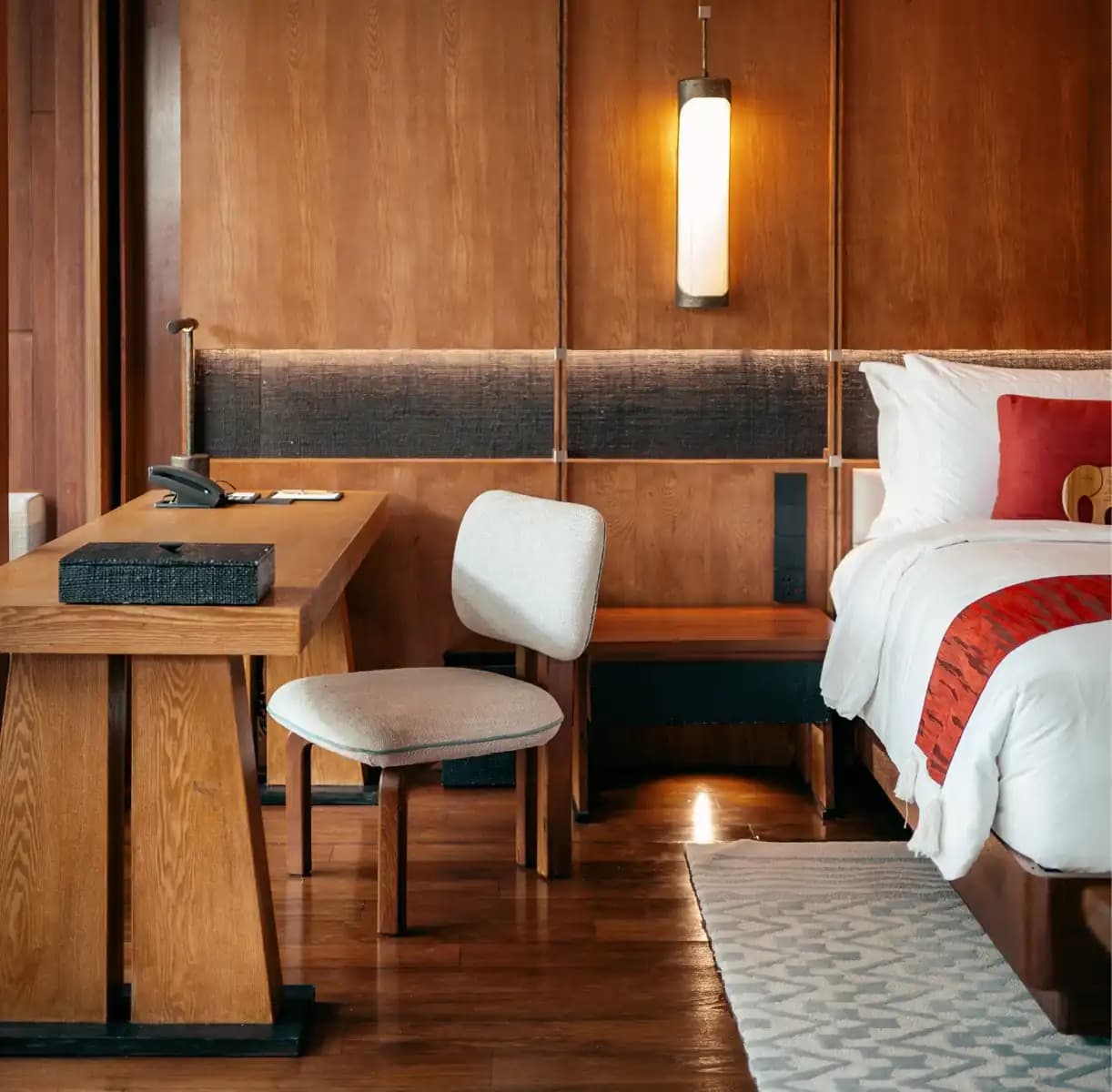
A guest room must support many small rituals: entering with luggage, setting down a key, opening curtains, working briefly, bathing, dressing, resting, and waking. Good planning makes these actions effortless. Circulation should remain clear even when two people occupy the room. Luggage, technology, and personal objects need natural places to settle. Lighting controls must be understandable at first touch, especially beside the bed.
The most memorable rooms balance familiarity with surprise. Guests need the reassurance of comfort, privacy, and ergonomic logic, but they also seek a sense of place. That character may emerge through a locally informed craft technique, the grain of regional timber, a colour drawn from the landscape, or a composition that frames a specific view. Authenticity is strongest when it is integrated into the architecture rather than applied as a theme.
“Five-star design is not defined by excess. It is defined by the absence of friction and the presence of meaning.”
Materiality must deepen over time
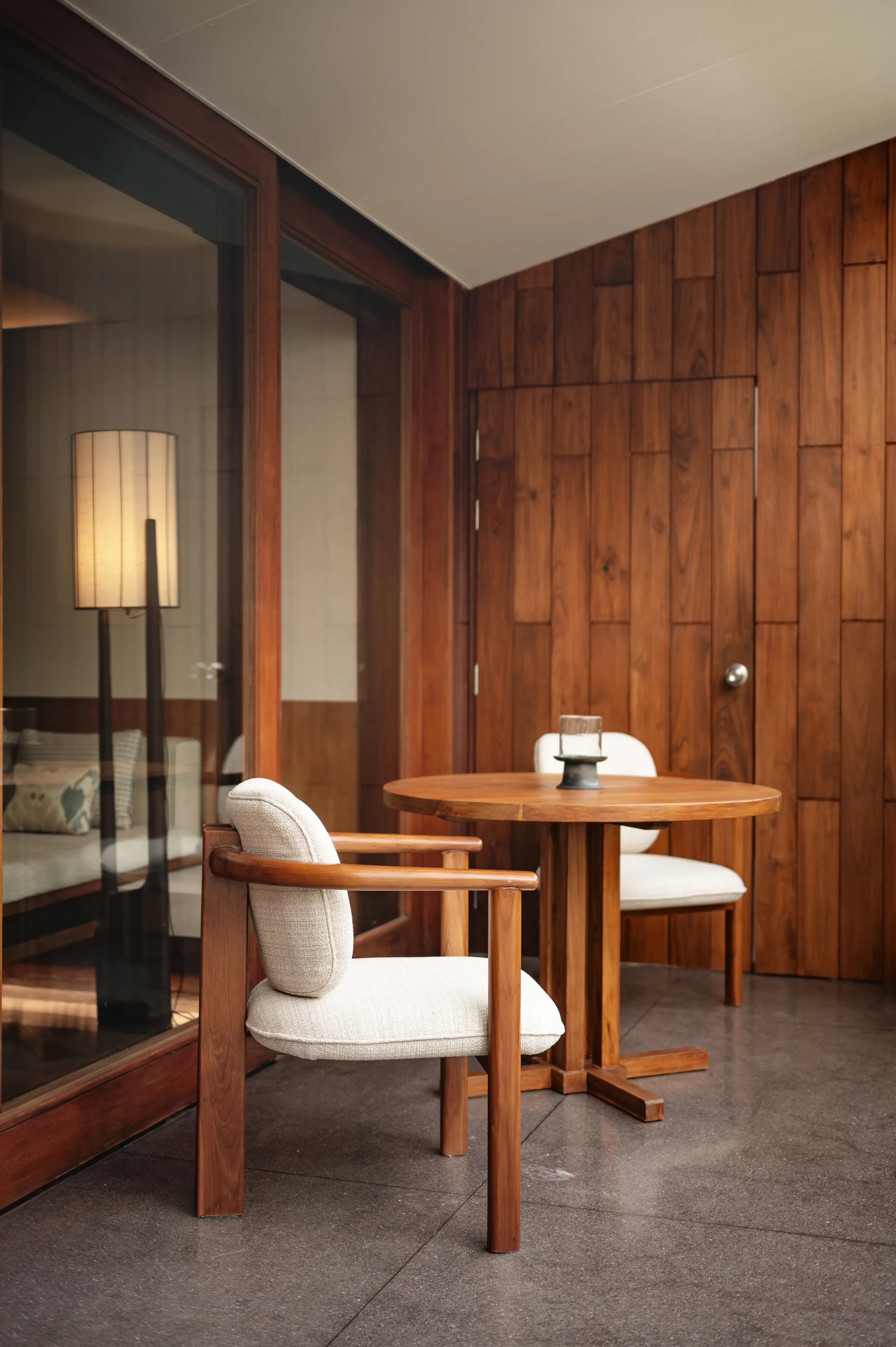
Hospitality interiors are touched, cleaned, and occupied continuously. Materials must therefore be selected for both sensory quality and operational resilience. Stone edges, timber finishes, metal patinas, upholstery seams, and junctions between surfaces deserve as much consideration as the broad visual concept. A beautiful material used in the wrong way quickly becomes a maintenance problem; a durable material detailed with care can age gracefully and acquire character.
Bespoke elements are valuable when they improve the experience or express identity. A custom headboard may integrate lighting and power; a screen may organise privacy while filtering light; a crafted handle may become the most intimate point of contact in the room. The goal is not novelty for its own sake, but a coherent family of details whose scale, tactility, and tone belong to the project.
Atmosphere is built with the invisible
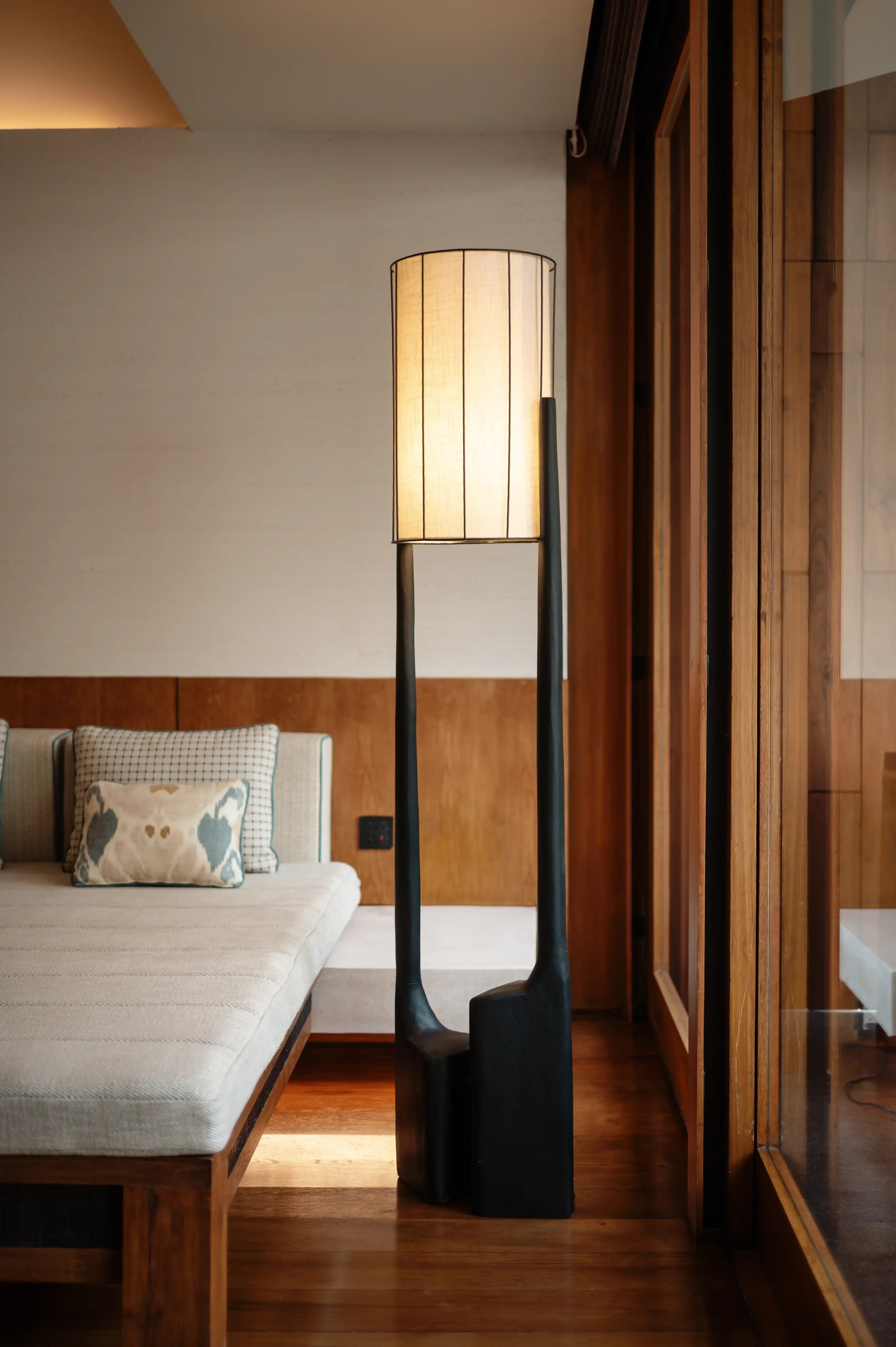
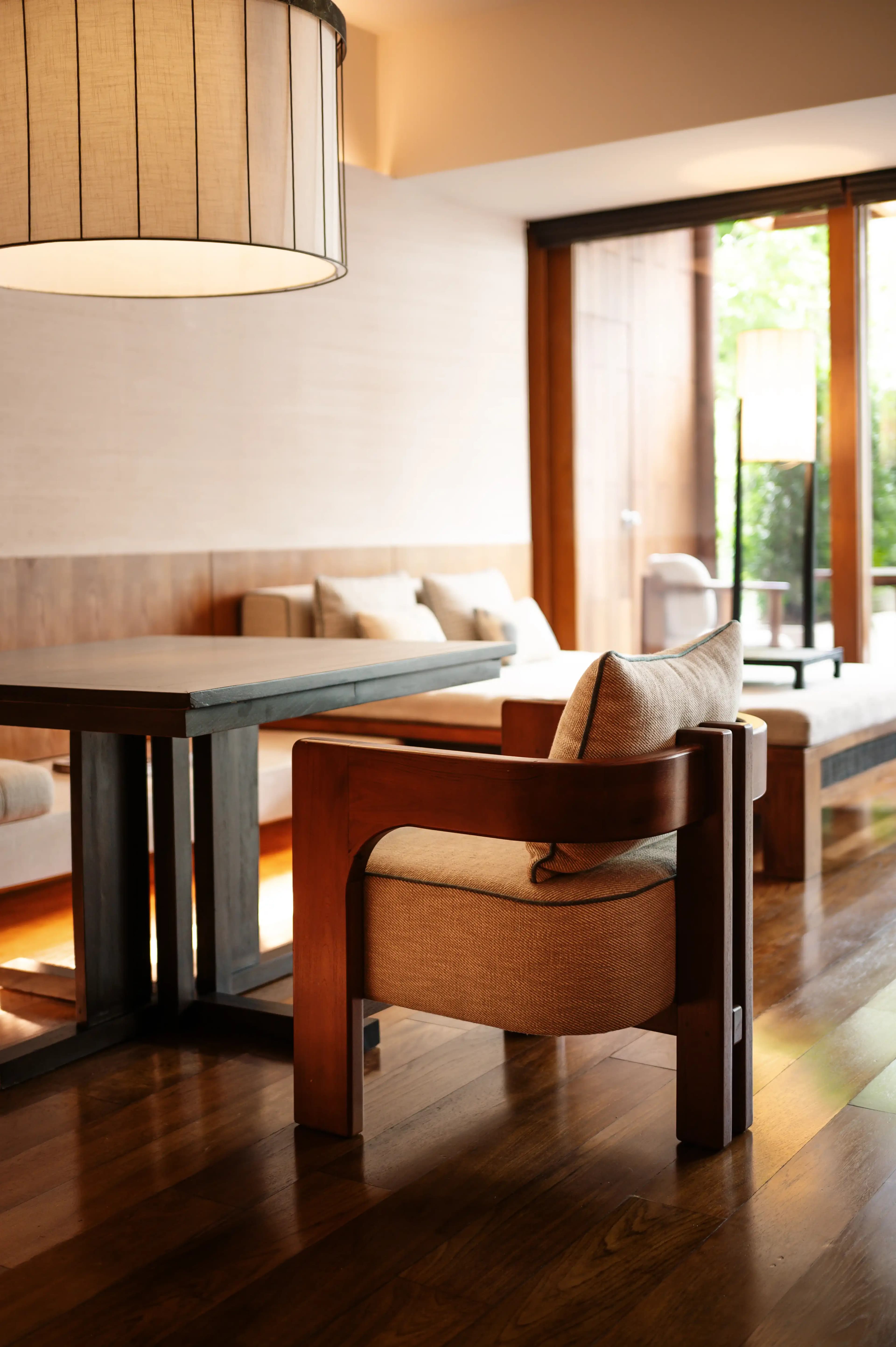
Light and acoustics shape mood as powerfully as visible finishes. A successful lighting scheme works in layers: daylight, ambient illumination, task light, and carefully chosen accents. Colour temperature should support the material palette and change appropriately across the day. Brightness alone does not create comfort; contrast, shadow, and the concealment of sources are often what make an atmosphere feel refined.
Acoustic comfort is equally essential. The lobby must sustain energy without becoming exhausting. Corridors should soften footsteps and door noise. Within the room, mechanical systems, plumbing, and sound transfer must recede from awareness. These technical decisions are rarely photographed, yet they define whether luxury can actually be felt.
A complete experience
The strongest hotel interiors align guest experience, brand character, and operational reality. Designers must think simultaneously about the visitor seeing a space for the first time and the team caring for it every day. Service routes, storage, replacement cycles, accessibility, and cleaning are not constraints separate from creativity; they are part of the design intelligence that allows beauty to endure.
Ultimately, a five-star experience is remembered as a feeling: being welcomed, understood, restored, and connected to a place. Interior design gives that feeling physical form. Through proportion, material, light, acoustics, craft, and precise planning, hundreds of decisions become one seamless story.